Showing posts with label Literature. Show all posts

Friday, August 6, 2010

My (Un-asked-for) Opinions Regarding Cormac McCarthy

So the other night Robyn and I (and our roommates) watched the movie The Road, starring Viggo Mortensen, based upon the novel by Cormac McCarthy. I really, really disliked it, even though I also thought that Viggo was good, and the little boy was good, too, but the movie as a whole left me shaken and depressed, and not in that good way. (Like the feeling that I got after seeing Das weiße Band. That movie was amazing.)

My morose fascination with McCarthy began after seeing No Country for Old Men, which immediately became one of my favorite movies of all time.* Soon after viewing the movie, I went out and bought the book, and was shocked by what happened next. I hated it. It was dry, bland, violent, humorless, and had much stronger racist and anti-immigrant tones than the movie. I disliked it so much that I'm pretty sure that I gave it away, which is something that I never do with my books. In other words, I discovered that everything that I liked about the movie No Country for Old Men - the wit, the absurdity, the beautiful landscapes - had been put there by the Coen brothers. It felt to me as if they took a book completely lacking in self awareness and made it realize what was actually important in it and then showed it to the rest of us.**

And then along comes The Road. I haven't read the book, although after seeing the movie I went online and read the first chapter. I still think I will try to check it out of the library sooner than later. But based on my literary experience with No Country for Old Men, this film seemed much more "faithful" to McCarthy's overall world view; a hopeless, colorless, dying world populated almost entirely by men without names who are all simply standing in for some part of the human soul. As Robyn pointed out while we were watching the movie, "It would be the worst thing ever to be stuck in a Cormac McCarthy novel."

On the other hand, maybe I'm just missing something here. After all, The Road did win the Pulitzer Prize in 2007, and I pretty much trust those guys to know their literature.*** I've also had a few conversations with people whose literary judgment I trust and admire, who have said that they love McCarthy. I went looking for reviews of The Road, and found the NY Times glowing review by William Kennedy. It really helped cement some of my thoughts and opinions regarding McCarthy's writing. I'm going to try to restrict my criticism here to what I take to be McCarthy's primary themes in the book No Country for Old Men and The Road, and assuming that the movie was faithful to the book, which everyone says it was.

Kennedy writes, "The overarching theme in McCarthy’s work has been the face-off of good and evil with evil invariably triumphant through the bloodiest possible slaughter." Bingo. That was one of my biggest problems with No Country for Old Men. Not the evil triumphant part; I like evil triumphant. There would be no Orwell or Kafka without it. But the means by which evil triumphs in McCarthy's world leaves so much to be desired; it triumphs through bloodshed, through relentless, meaningless slaughter and violence. Look, now let me be absolutely clear****:I'm not opposed to violence, either. Violence - horrific violence - is a very real part of our world. As we speak, people are boiling to death in Moscow. But the way that McCarthy mystifies violence, the way that he makes it into something that, by its very nature, cannot be understood or resisted, I find to be particularly annoying.

Evil or violence in a text without meaning adds nothing to that text. In No Country for Old Men, Chigurh is without ethnicity, age, face, class, motivation, etc. He is merely a force of evil - which is the point. But to that my response is: so what? If I am being presented with a picture of violence that I find to be useless and unrealistic, what interest do I have in reading more about it? In an excellent negative review of The Road on litkicks.com, Levi Asher observes:

The first thing the reader detects is that this will be a thoroughly humorless book, a book of punishing, guilt-ridden unpleasantness, a book that must be aiming to be "good for us", because it's sure not aiming to be fun. That's the moral outlook Cormac McCarthy always offers -- a stern "church lady" tone warning of stark choices between evil and redemption.
Right. In the way that McCarthy presents evil - what I call "apolitical evil," because it is an evil that transcends meaning and identity - the only expectable response from the reader is this kind of Opus Dei flagellation. We have always already sinned, and now it is too late, the Reaper cometh, and all we can do is bemoan our cruel fates. And I think this kind of conception of evil - the kind that warns us against action - is cowardly.

The second major problem that I have with McCarthy is with his prose. In his review, Kennedy says:

But on the basis of “No Country for Old Men” and “The Road” it does seem that he has put aside the linguistic excesses and the philosophizing for which he has been both venerated and mocked — those Faulknerian convolutions, the Melvillean sermonizing — and opted for terse dialogue and spartan narrative, a style he inherited from another of his ancestors, Hemingway, and long ago made his own.
I must tread carefully here because three of my favorite things in the world are linguistic excesses, philosophizing, and Melvillean sermonizing. And maybe this is something that does, in the end, just come down to taste. But what Kennedy calls "terse dialogue and spartan narrative" I call a lack of concern for his world that he has created. I keep thinking about Henry James, and how probably the most common criticism that I have heard of him regards his "artifice", his tendency to go on and on, describing every last minute detail in a scene, the slow pace with which is narrative proceeds as he rambles down shadowed hallways of thought and aside; his questionable use of semi-colons. But let me put it this way: The opposite of gilded is not authentic.

Finally, I call shenanigans on McCarthy being the inheritor of Hemingway. Yes, they both have "terse" prose and, yes, they have both become known as "tough guys." But Hemingway is a creator of worlds in a way that I have not seen from McCarthy. First, Hemingway's novels are populated by human beings. Not Men. Sure, maybe the most admirable quality in a woman is that of being like a man (Pilar from For Whom the Bell Tolls) and the worst quality in a man is being like a woman (Robert "The Jewish Guy" Cohn in The Sun Also Rises). But there is a certain sad empathy, a humanism, at work in Hemingway's work that I have found sadly lacking in McCarthy's.

Hemingway's novels are warm, real, oh-so-colorful, and most importantly, they have something at stake. There is nothing at stake in No Country for Old Men - in a way, everything has become predetermined, evil is ascendant, nothing to but sit and wait for the apocalypse. There is plenty of evil in Hemingway, an evil that is actually ascendant in the rise of European fascism, but it is a tangible and human evil, one that has roots within ourselves, it is the evil of banality. At the end of For Whom the Bell Tolls, Robert Jordan narrates: "The world is a fine place and worth the fighting for and I hate very much to leave it." I don't think Cormac McCarthy would agree with this statement. Even if The Man (Adam) carries within him The Fire in The Road, it is not the same idea of The Fate of The World being decided and decidable through human actions. All Man can do is tuck His burning Fire away from The World, the cruel, cruel world.


*One of my favorite things to do when I'm home alone is to get real drunk, stay up real late, and pop in No Country for Old Men while eating refried beans straight outta the can.

** Case in point: The movie would have been ten times worse if Javier Bardem were not sporting that ridiculous haircut. Seriously - the movie actually hinges on his pageboy do.

*** Although I realized that two of my favorite books, The Interpreter of Maladies and The Amazing Adventures of Kavalier & Clay, won the Pulitzer in 2000 and 2001, respectively. Maybe I'm just a pre-9/11 kind of guy? Also: Hooray, immigrant literature!

**** Said in his best Obama voice.

Sunday, August 1, 2010

The Best Things On The Internet

One of the other reasons why reasons why I decided to complete the "Literary March Madness" that we started in, um, March... :$.... was this video, that hopefully y'all have seen already one place or another, that Robyn showed me a little while back:


I saw this and I was all like, "OMG! This is exactly what I would do with my life if I had unlimited resources and if the constraints of space and time were of no matter!" But I can't, so the next best thing is creating imaginary competitions where famous writers fight each other to the death for my amusement.

That's the best thing on the internet right now. The second best thing is this:

The Colbert ReportMon - Thurs 11:30pm / 10:30c
Kevin Kline
www.colbertnation.com
Colbert Report Full Episodes2010 ElectionFox News


How much would you pay to see a traveling, two-man, impromptu show starring Kevin Kline and Stephen Colbert? One million dollars, that's how much. (Also, I just found out that Kevin Kline got a Tony nomination for playing Falstaff. So he's probably thought about that one alot.)

Thursday, March 25, 2010

March Madness Round 1

Austen v. Walcott


Bronte v. Lahiri


Bulgakov v. Murdoch


Cather v. Kesey


Tuesday, July 7, 2009

My Summer Reading List

The weather has finally become a bit more Summer-y this week, and we're finally supposed to hit ninety degrees on Friday. So, yes, soon that lovely cold and rainy season will become the much expected hot and muggy season, making the next three days the only "nice" weather that we'll have until September.

This meteorological shift has inspired within me a desire to get back into that old hobby of mine called "reading." I have enough time on my hands these days, God knows, and R.A. is always coming home from the bookstore/ library/ rummage sale with new books in her clutches, and so I often end up picking up the books that she has just finished, many times after she gets too frustrated trying to talk to me about something that I haven't yet read.

Therefore, without (much) further ado, and to kinda coincide with my summer movie list, I present a partial list of books that I have either read, am reading, or will read this summer:

Interpreter of Maladies by Jhumpa Lahiri.
Image:Interpreterofmaladiescover.jpg

This is one of those aforementioned books that I read after R.A. finished it in order for us to be able to talk about it. We have seen the movie "The Namesake," based on Lahiri's novel, although I haven't read that book (yet). Interpreter of Maladies is a collection of short stories that Lahiri wrote for her M.A. thesis at Boston University and then went on to win the Pulitzer Prize in 2000. Most of the stories revolve around the lives of immigrant Indian families in the U.S., or around the tensions between generations of Indian-Americans. I really, really liked this book. I especially liked how each of these stories seemed to be a reiteration of the same story over and over again, with slight modifications in the characters and settings. It gave the book a sense of being both a complete and whole piece, while also existing in time as a work in progress. It actually made me think a little bit of Italo Calvino's Invisible Cities, although I think I prefer Interpreter of Maladies because it deals with real people and not with crazy, surrealist Italian hallucinations.

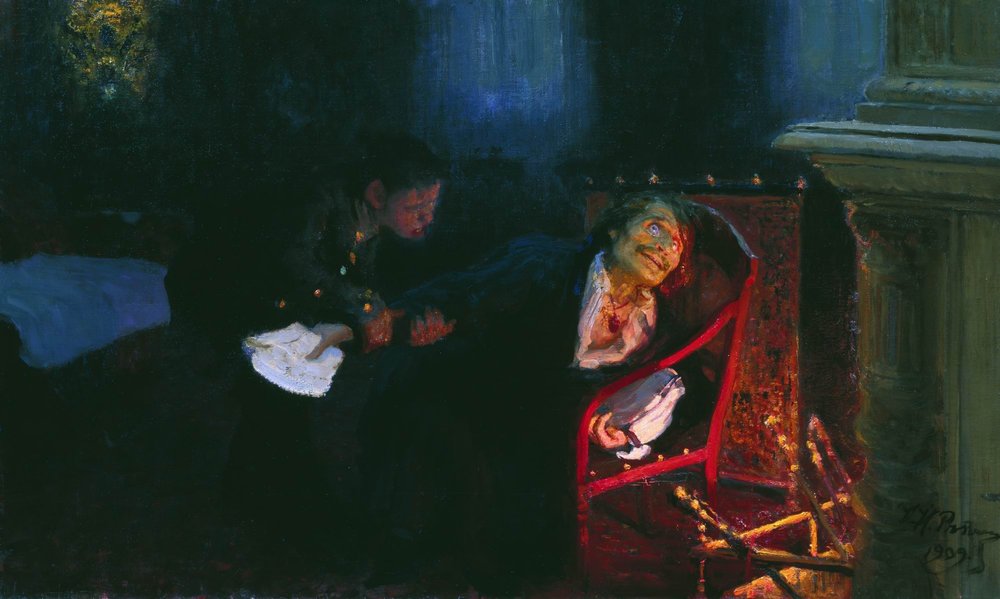
Short Stories by Nikolay Gogol
File:Gogol by Repin.jpg
Speaking of crazy, surrealist hallucinations...

So I'm reading Gogol for a couple of reasons. The first was because Lahiri's protagonist in "The Namesake" is named "Gogol," and I thought that knowing more about the Russian writer would give me some additional insight into the story. So far, it hasn't. However, the second reason is that I wanted to resurrect my tradition of reading Russian lit during the summer. From 2004-2007, I read a Dostoyevsky novel each summer (The Brothers Karamazov, Crime and Punishment, The Idiot, Demons.) And then, last year, because I suck, I stopped. I tried replacing Dostoyevsky with Henry James, but it too me, like, eight months to finish The Golden Bowl, and besides, stories that so often take place in London sitting rooms while everyone drinks tea and has long soliloquies about the rain outside ought to be read between January and April. On the other hand, I feel like stories about opium induced madness and suicide and about your nose leaving your body and usurping your identity are best read during the dog days of summer, as they will help with the night sweats and fever dreams.*

Wicked, by Gregory Maguire


OK, so I am probably the last person in the world to have read this book. And, even though I'm only about a quarter of the way through it, it is pretty awesome. My favorite thing about Wicked is the political intrigue; I have always been in awe of authors, especially fantasy and sci-fi authors, who can create a society that has believable and realistic political issues. On one level, Wicked makes me laugh at the absurdity of the class conflict between the Munchkinlanders and the Gillikinese and the constant debating over whether or not to expand the Yellow Brick Road. But then they become real, important issues that I care about very deeply. I think that the epitome of this kind of construction of a real and yet imaginary politics is Frank Herbert's Dune, although that series becomes so wrapped up in the theology and metaphysics of its universe that it loses sight of what makes it initially intriguing to the reader, those issues that apply categorically to all people of every class, creed, and ideology.

By which I mean fighting over water rights.

*Help in the sense of making them weirder and more terrifying.

Monday, August 4, 2008

My Summer Reading List

Before I begin, yes, I know it's August already. In fact, I am painfully aware that it is August already. But that shouldn't change the fact that it is never, never too late to put together your Summer reading list. Even if it means that your reading list is going to stretch into November, I still think that it is a healthy exercise in self discipline and goal setting. (As if I know anything about self discipline or goal setting...)

For as long as I can remember, which actually is not that very long, the magazines and news papers that I read have always had their ceremonial "Summer Books" issue, where someone who is (hopefully) literate and of good taste makes her or his recommendations about what it is that you should be reading during your dream Summer vacation. Of course, this all just makes me want to ask exactly why it is that Summer is the designated season for reading (just as it is also the designated season for going to the movies) and what, exactly, it is that we're all supposed to be doing during the Fall, Winter, and Spring. (Working?)
Nevertheless, countless publishers and publications continue to churn out various "must-read" lists for your beach-towel pleasure. And although it isn't exactly a "Summertime" kind of list - given that it doesn't have that "little light read" feel that I think your classic beach-read list is supposed to have - one of the most famous and consistently controversial of these lists is the Modern Library's Top 100 English Language Novels of the 20th Century. I remember when this list first came out, and also remember the heat that it took for being too conservative, favoring those novels written by dead white guys that you had to read in your English 101 class a little too heavily.

Two things struck me rather quickly upon re-reading this list: First, that it much, much better than the "Reader's List" submitted by the Modern Library's audience, and is displayed prominently next to the Board's List. Seriously, are these people for real?? L. Ron Hubbard and Ayn Rand account for seven of the top ten English novels of the 20th Century? Who on Earth gave the keys of the Asylum to the inmates? The second recognition is that I am not nearly well-read as I like to think of myself being. Of the Board's 100 novels, I have finished 12. Perhaps even more telling, I have started (but not finished) an additional 10.

So part of my Summer resolution is to knock a couple more of these novels off of my "to-read" list. I'm reading "The Golden Bowl" right now. Of course, there is a lot out there to read other than 20th Century English language novels. This is the first time in five years that I haven't picked out a Dostoevsky novel to read over the course of the entire Summer. I have fond memories of those midsummer reads; it's a very interesting thing to be reading about Raskolnikov freezing to death in his St. Petersburg apartment when it's ninety degrees outside and you're sipping an ice-cold Mirror Pond Pale Ale out on the deck.

In the same vein, R.A. has this list of "the very long book list" on her blog. The rules are simple: Bold means you've finished the book. Italicized means you started it but not finished it. You can strike through a book, if you think it doesn't belong on the list, although the only books that I feel that way about are ones that I haven't yet opened, so I guess I'll reserve judgment for now.

1984
The Aeneid
The Amazing Adventures of Kavalier and Clay
American Gods
Anansi Boys
Angela’s Ashes : A Memoir
Angels & Demons
Anna Karenina
Atlas Shrugged
Beloved
The Blind Assassin
Brave New World
The Brothers Karamazov
The Canterbury Tales
Catch-22
The Catcher in the Rye
A Clockwork Orange
Cloud Atlas
Collapse : How Societies Choose to Fail or Succeed
A Confederacy of Dunces
The Confusion
The Corrections
The Count of Monte Cristo
Crime and Punishment
Cryptonomicon
The Curious Incident of the Dog in the Night-time
David Copperfield
Don Quixote
Dracula
Dubliners
Dune
Eats, Shoots & Leaves
Emma
Foucault’s Pendulum
The Fountainhead
Frankenstein
Freakonomics : A Rogue Economist Explores the Hidden Side of Everything
The God of Small Things
The Grapes of Wrath
Gravity’s Rainbow
Great Expectations
Gulliver’s Travels
Guns, Germs, and Steel: The Fates of Human Societies
A Heartbreaking Work of Staggering Genius
The Historian : A Novel
The Hobbit
The Hunchback of Notre Dame
The Iliad
In Cold Blood : A True Account of a Multiple Murder and its Consequences
The Inferno
Jane Eyre
Jonathan Strange & Mr Norrell
The Kite Runner
Les Misérables
Life of Pi : A Novel
Lolita
Love in the Time of Cholera
Madame Bovary
Mansfield Park
Memoirs of a Geisha
Middlemarch
Middlesex
The Mists of Avalon
Moby Dick
Mrs. Dalloway
The Name of the Rose
Neverwhere
Northanger Abbey
The Odyssey
Oliver Twist
On the Road
The Once and Future King
One Flew Over the Cuckoo’s Nest
One Hundred Years of Solitude
Oryx and Crake : A Novel
A People’s History of the United States : 1492-present
Persuasion
The Picture of Dorian Gray
The Poisonwood Bible : A Novel
A Portrait of the Artist as a Young Man
Pride and Prejudice
The Prince
Quicksilver
Reading Lolita in Tehran : A Memoir in Books
The Satanic Verses
The Scarlet Letter
Sense and Sensibility
A Short History of Nearly Everything
The Silmarillion
Slaughterhouse-five
The Sound and the Fury
The Tale of Two Cities
Tess of the D’Urbervilles
The Three Musketeers
The Time Traveler’s Wife
To the Lighthouse
Treasure Island
Ulysses
The Unbearable Lightness of Being
Vanity Fair
War and Peace
Watership Down
White Teeth
Wicked : The Life and Times of the Wicked Witch of the West
Wuthering Heights
Zen and the Art of Motorcycle Maintenance : An Inquiry Into Values

On a strangely related note, the Chicago Summer rain is now falling so hard that it is coming through our windows and causing some pretty serious water damage to some of our books, including the Aeneid and the Brothers Karamazov. I better get reading before the flood comes...